 EN
 BR
 DE
 ES
 FR
 RU
 ID
 TR
 IT
 JP
 SA
 VN
 TH
 KR

Proxy vs VPN: What's the Difference and Which One Should You Choose?

 Key takeaways

- Understand the difference between VPN and proxy technologies.
- Learn how VPNs and proxies affect online privacy, security, and connection performance.
- Compare the strengths of each solution for browsing, streaming, gaming, and remote work.
- Discover why a VPN protects all internet traffic while a proxy typically works only with specific applications.
- See how Guru VPN provides secure, encrypted connections for safer everyday internet use.
If you've ever searched for ways to improve your online privacy, you've probably come across both VPNs and proxy servers. Because they both can hide your IP address and help you access online content, many people assume they work the same way. In reality, the difference between vpn and proxy is much greater than it first appears. While both technologies act as intermediaries between your device and the internet, they provide very different levels of security, privacy, and functionality.
Understanding proxy vs vpn is important if you want to choose the right solution for your online activities. A proxy typically redirects traffic from a specific application or browser, whereas a VPN encrypts all internet traffic leaving your device. This additional layer of encryption helps protect your personal information, especially when using public Wi-Fi, shopping online, or working remotely.
Modern VPN services such as Guru VPN make secure browsing simple by combining strong encryption, fast global servers, and an intuitive user experience. Whether you're looking to improve your online privacy or secure your internet connection while traveling, a VPN offers broader protection than a traditional proxy. Learn more about its features.
In this guide, we'll explain how VPNs and proxy servers work, compare their strengths and limitations, and break down the main differences between the two. You'll also learn when each solution makes sense, which option is better for streaming, gaming, work, and everyday browsing, and why many users ultimately choose a VPN for more complete online protection.
Key Takeaways
- Understand the difference between VPN and proxy technologies.
- Learn how VPNs and proxies affect online privacy, security, and connection performance.
- Compare the strengths of each solution for browsing, streaming, gaming, and remote work.
- Discover why a VPN protects all internet traffic while a proxy typically works only with specific applications.
- See how Guru VPN provides secure, encrypted connections for safer everyday internet use.
What Is a VPN and How Does It Work?
What Is a VPN?
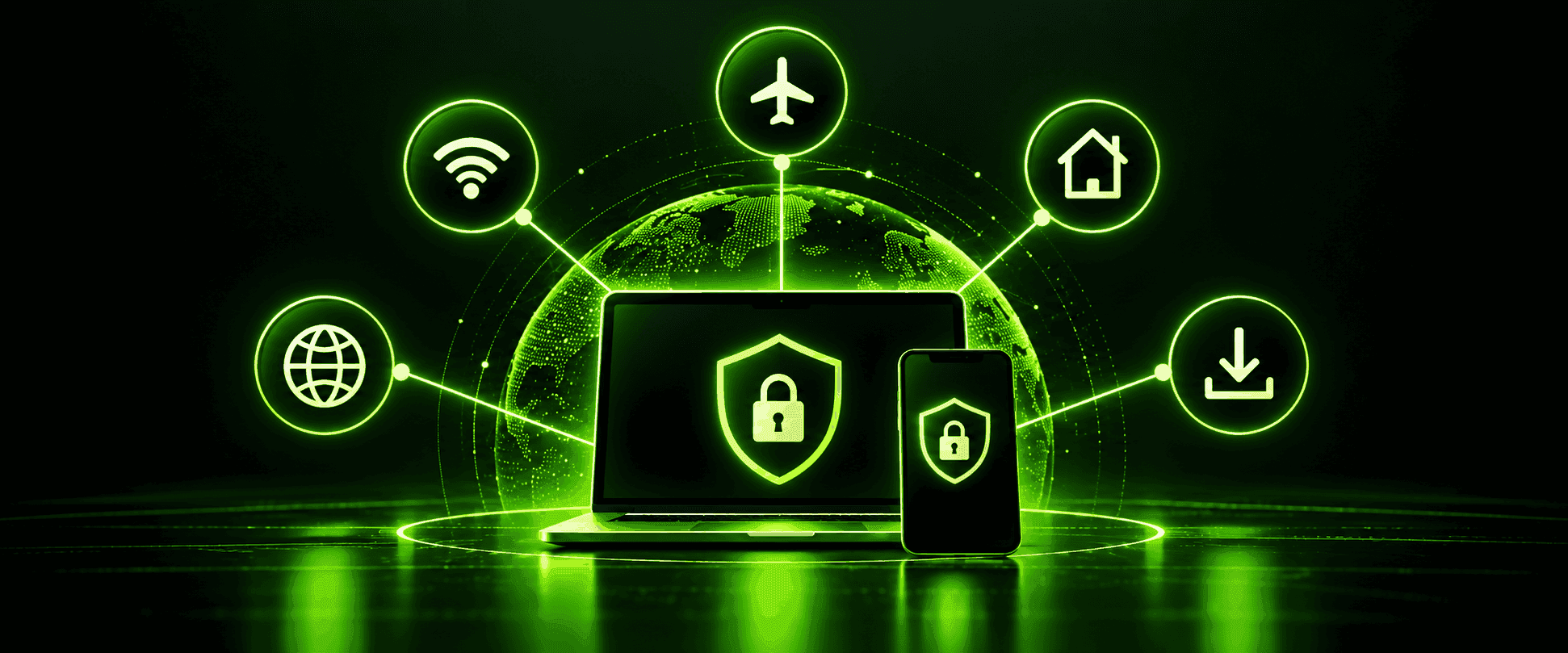
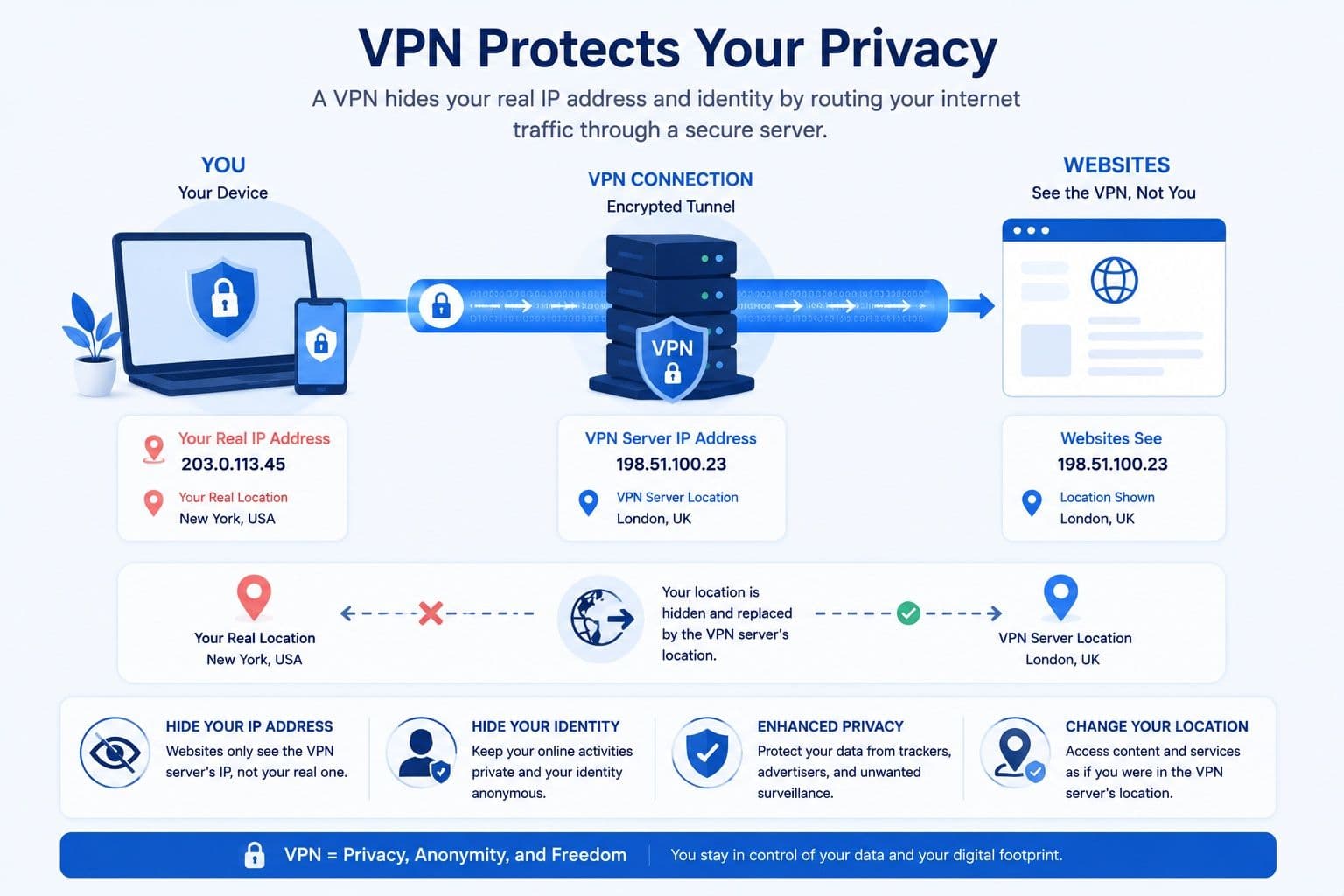
A Virtual Private Network (VPN) is a technology that creates a secure connection between your device and the internet. Its primary purpose is to protect your online activity by encrypting internet traffic and hiding your real IP address. Instead of connecting directly to websites or online services, your data first passes through a secure VPN server.
By masking your IP address, a VPN makes it more difficult for websites, advertisers, internet service providers, and other third parties to identify your actual location or track your online activity. This added privacy is especially valuable when using public Wi-Fi, accessing sensitive accounts, or browsing from different countries.
Unlike tools that only affect certain applications, a VPN protects all internet traffic generated by your device. This means your browser, email client, messaging apps, streaming services, and other online applications all benefit from the same encrypted connection.
How Does a VPN Work?
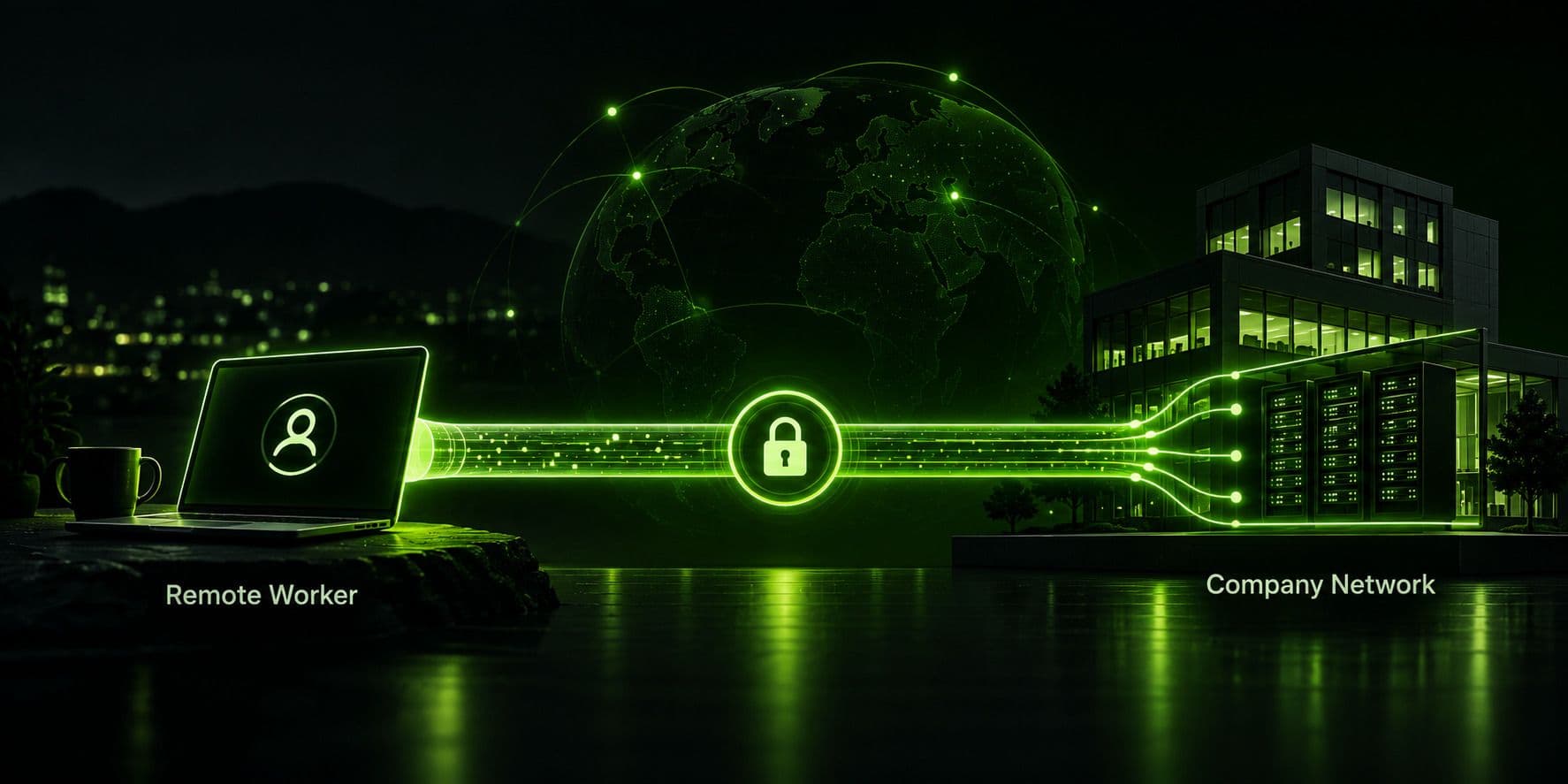
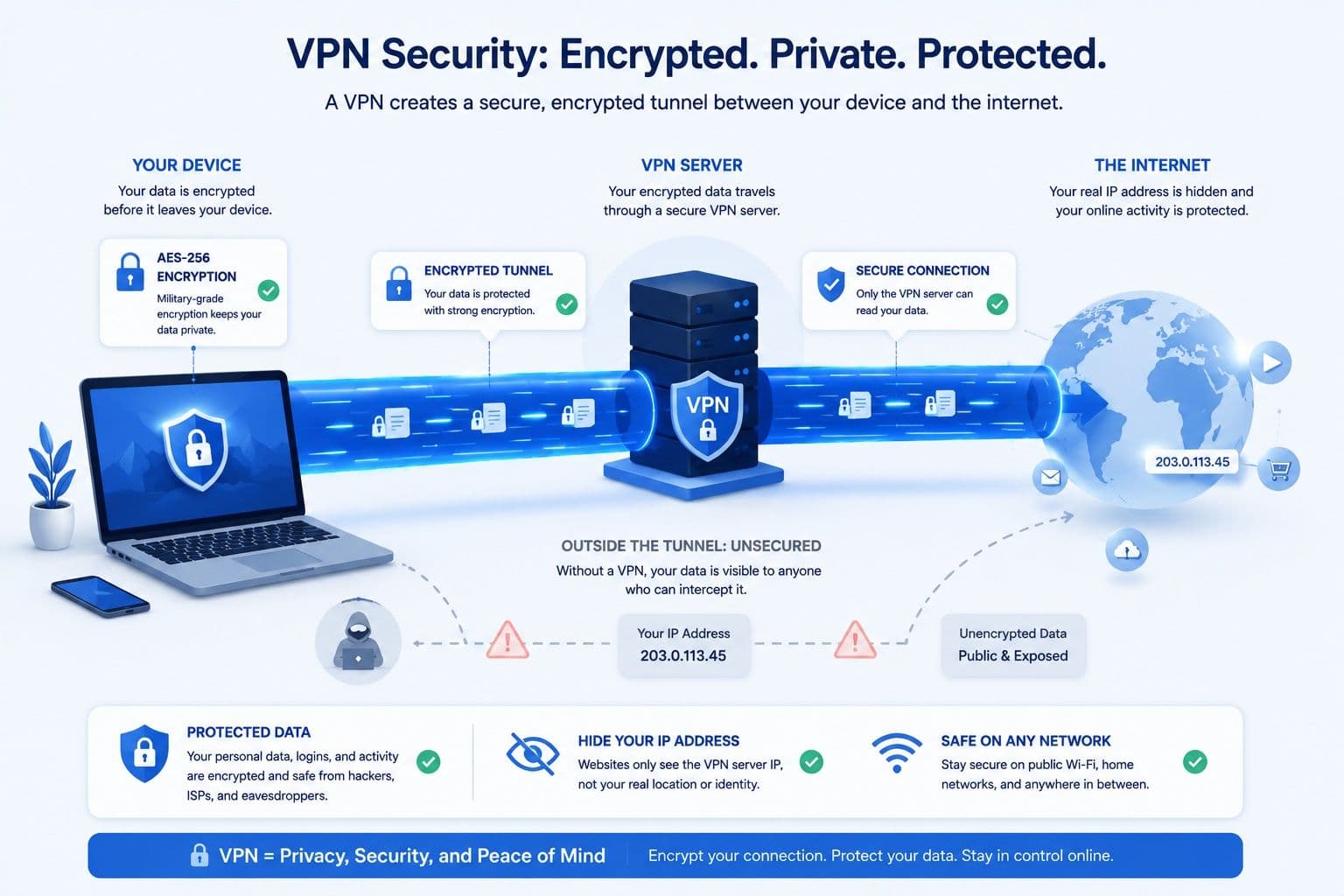
When you activate a VPN, the application first establishes a secure connection with a VPN server. Before any data leaves your device, it is encrypted, making it unreadable to anyone who might intercept it along the way.
The encrypted information then travels through a secure tunnel to the VPN server. After reaching the server, your requests are forwarded to websites using the server's IP address instead of your own. Responses return through the same encrypted tunnel before being decrypted on your device.
This process protects your internet traffic from eavesdropping while also improving your privacy by concealing your actual IP address. Modern VPN providers such as Guru VPN combine strong encryption with global server networks to deliver secure and reliable connections for everyday browsing, streaming, gaming, and remote work. You can explore available server locations.
| Without a VPN | With a VPN |
|---|---|
Real IP address is visible | Real IP address is hidden |
Traffic is not encrypted | Internet traffic is encrypted |
ISP can monitor browsing activity | ISP cannot see encrypted browsing content |
Public Wi-Fi offers limited protection | Public Wi-Fi connections are significantly more secure |
Device connects directly to websites | Traffic passes securely through a VPN server |
What Is a Proxy and How Does It Work?
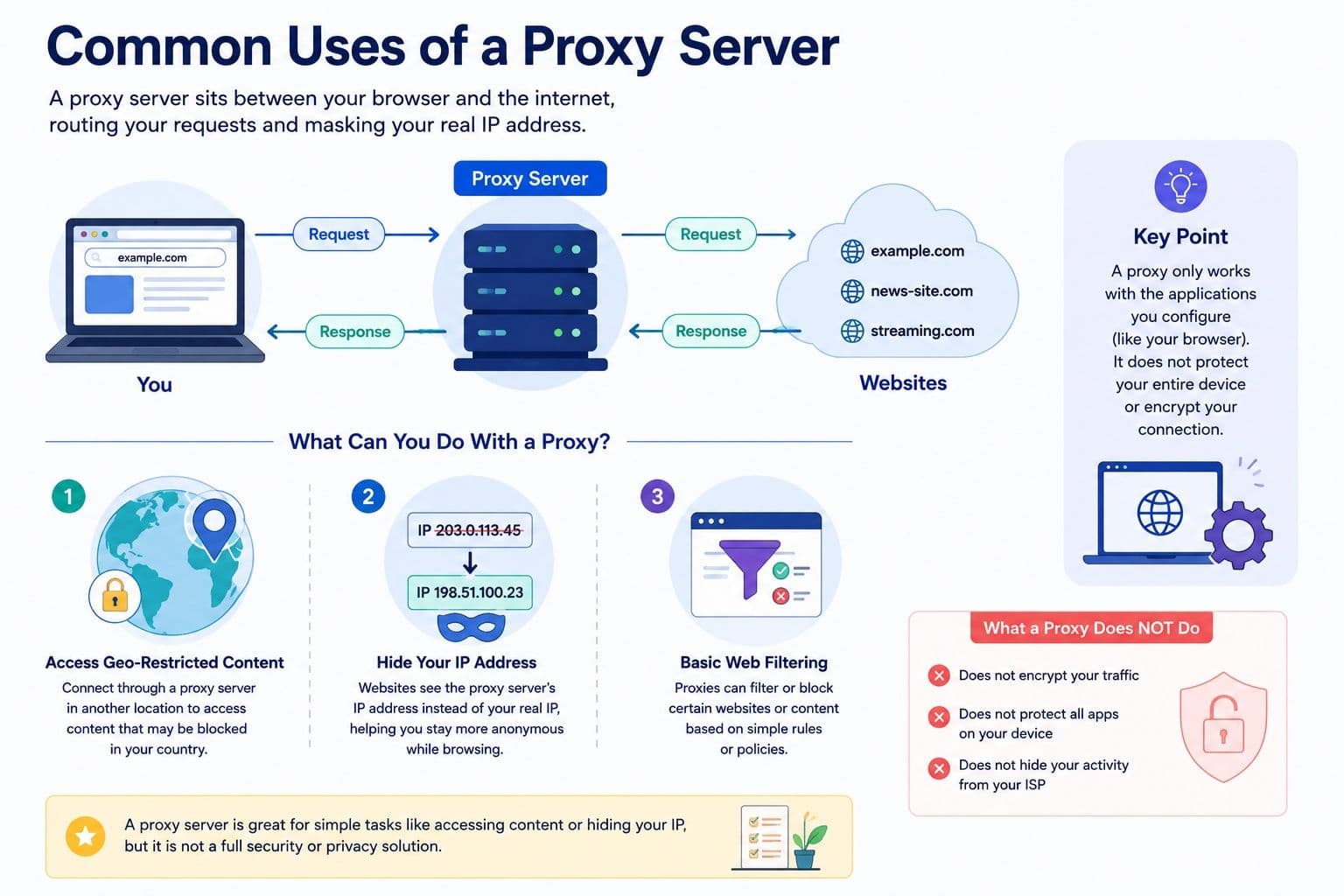
A proxy server acts as an intermediary between your device and the websites or online services you access. Instead of connecting directly to a website, your request is first sent to the proxy server, which forwards it on your behalf and returns the response.
Like a VPN, a proxy can replace your visible IP address with another one, making it appear as though your request comes from a different location. However, unlike a VPN, most proxy servers do not encrypt internet traffic. As a result, your data may still be visible to your internet service provider, network administrator, or other parties monitoring the connection.
Another important difference is that proxies usually work at the application level. For example, you might configure a web browser or a specific program to use a proxy while the rest of your device continues using a normal internet connection.
Common Proxy Uses
Proxy servers are commonly used for relatively simple networking tasks. One of their most popular uses is accessing websites from a different apparent location by routing traffic through another server.
They can also help users bypass basic network restrictions or test how websites behave in different regions. Developers, businesses, and IT teams often use proxies for tasks such as website testing, content filtering, or managing automated requests.
Because proxies generally operate on an application-by-application basis, they are useful when only one program requires a different IP address. However, they are not designed to provide comprehensive device-wide security.
When comparing vpn vs proxy, the biggest distinction is the level of protection. A proxy focuses primarily on redirecting traffic and changing IP addresses, while a VPN encrypts all internet traffic and secures the entire connection. Understanding this difference helps users choose the solution that best matches their privacy and security needs.
VPN vs Proxy: Key Differences Explained
Although VPNs and proxy servers both route internet traffic through another server, they are designed for different purposes. Understanding the key differences helps you choose the right solution based on your privacy, security, and performance needs. When comparing proxy vs vpn, the biggest distinction is how much of your internet activity is actually protected.
Security and Encryption
The most significant advantage of a VPN is encryption. Every piece of internet traffic leaving your device is encrypted before it reaches the VPN server. This secure tunnel protects sensitive information such as passwords, banking details, emails, and personal messages from interception.
Most proxy servers do not encrypt traffic. They simply forward requests between your device and the destination website. While a proxy can hide your IP address from the website you're visiting, your internet traffic may still be visible to your internet service provider, network administrator, or anyone monitoring the connection.
For users who regularly connect to public Wi-Fi or handle confidential information online, encryption provides a much higher level of protection than a standard proxy.
Privacy and IP Protection
Both technologies can change your visible IP address, but they differ considerably in the level of privacy they provide.
A proxy hides your IP only for the specific application or browser configured to use it. Other apps on your device may continue communicating through your regular internet connection, exposing your real IP address and online activity.
A VPN protects the entire device. Every compatible application uses the encrypted connection automatically, reducing online tracking and helping prevent third parties from building detailed profiles of your browsing habits. This broader protection is one of the biggest advantages when evaluating the difference between vpn and proxy.
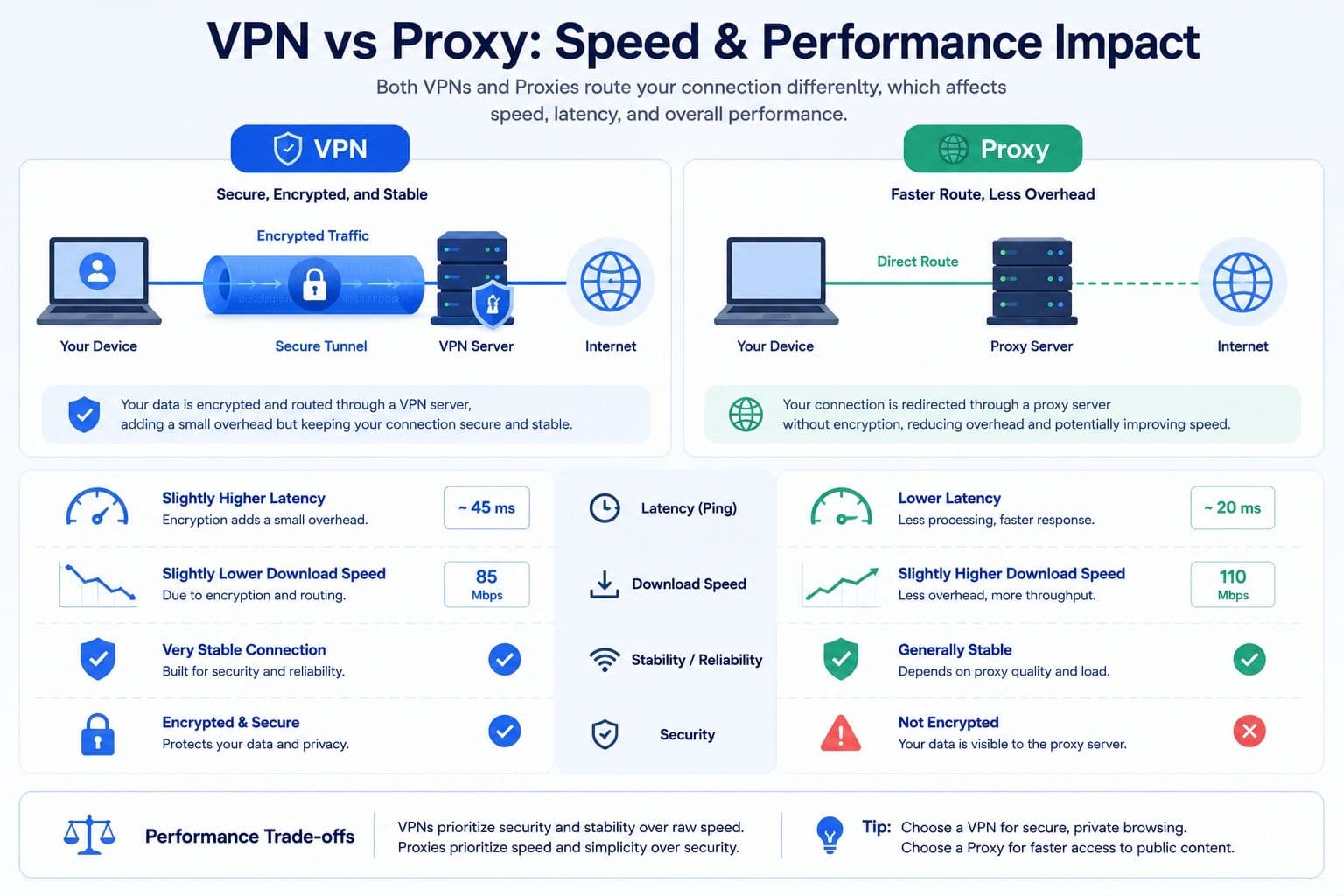
Speed and Performance
Connection speed depends on several factors, including server location, network quality, and the technology being used.
Because proxies generally don't encrypt data, they can sometimes introduce less processing overhead. However, the difference is often minimal with modern VPN services. Advanced VPN protocols and optimized infrastructure allow many providers to deliver fast speeds suitable for HD streaming, gaming, video conferencing, and large downloads.
Server selection also plays an important role. Connecting to a nearby server usually provides lower latency and better overall performance, regardless of whether you're using a VPN or proxy.
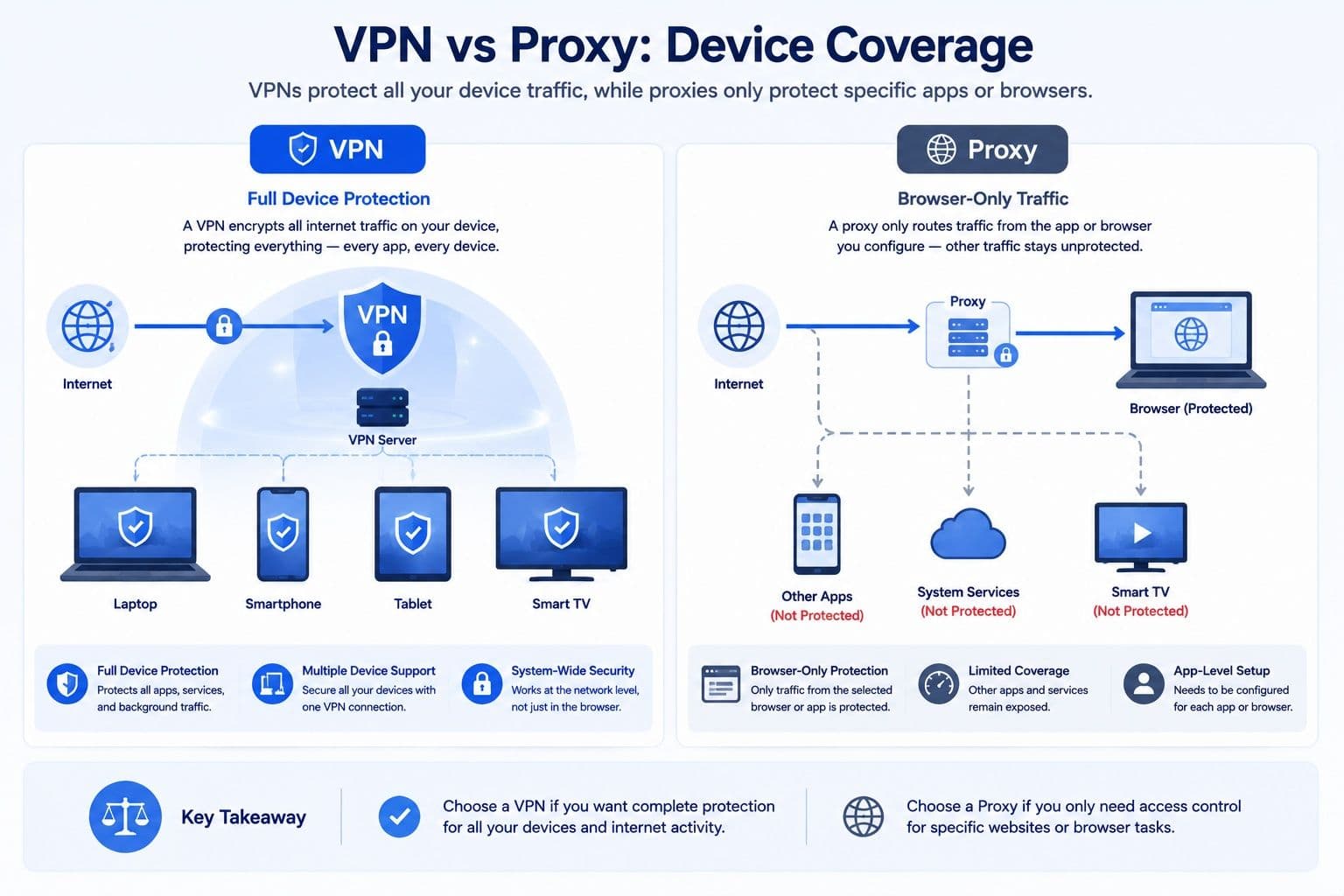
Device Coverage
Another major difference is the scope of protection.
A VPN secures your entire internet connection at the operating system level. Browsers, messaging apps, cloud storage, streaming platforms, and other applications all benefit from the same encrypted tunnel.
Proxy servers typically protect only the application configured to use them. If another app connects directly to the internet, it bypasses the proxy entirely. For users seeking comprehensive online security rather than application-specific routing, a VPN provides a far more complete solution.
VPN vs Proxy: Which One Should You Use?
The answer depends on what you're trying to accomplish. While both technologies can change your IP address, they serve different purposes. Understanding vpn vs proxy becomes much easier when you consider the activity you're performing online.
Everyday Browsing
For everyday internet use, a VPN is generally the better choice. It encrypts all internet traffic, helping protect your personal information while reducing online tracking by websites, advertisers, and internet service providers.
A proxy may be sufficient if you simply need to access a website through another IP address, but it doesn't provide the same level of privacy or device-wide protection.
Streaming and Content Access
Both VPNs and proxies can make it appear as though you're connecting from another location. However, a VPN usually delivers a more reliable experience thanks to encrypted connections, stable infrastructure, and optimized server networks.
Modern providers such as Guru VPN offer servers in multiple regions, making it easy to choose a nearby location for better performance or connect through another country when appropriate. You can browse available server locations.
Gaming and Downloads
Gaming requires low latency, stable connections, and consistent performance. Modern VPN protocols are designed to minimize delays while maintaining strong security, making them suitable for multiplayer gaming and large downloads.
A proxy may work for certain application-specific tasks, but it doesn't offer the same level of protection or connection stability during long gaming sessions or continuous file transfers.
Remote Work and Public Wi-Fi
When working remotely or using public Wi-Fi, security becomes much more important than simply changing your IP address.
A VPN encrypts all internet traffic, protecting business data, login credentials, emails, and confidential files from interception. This makes it the preferred solution for professionals, travelers, and anyone accessing sensitive information outside a trusted home network.
If your goal is comprehensive privacy, secure browsing, and reliable performance across all your devices, a VPN offers far more protection than a proxy. Services like Guru VPN combine modern encryption, optimized routing, and global server coverage to provide a secure internet experience without requiring complex setup.
Common Misconceptions About VPNs and Proxies
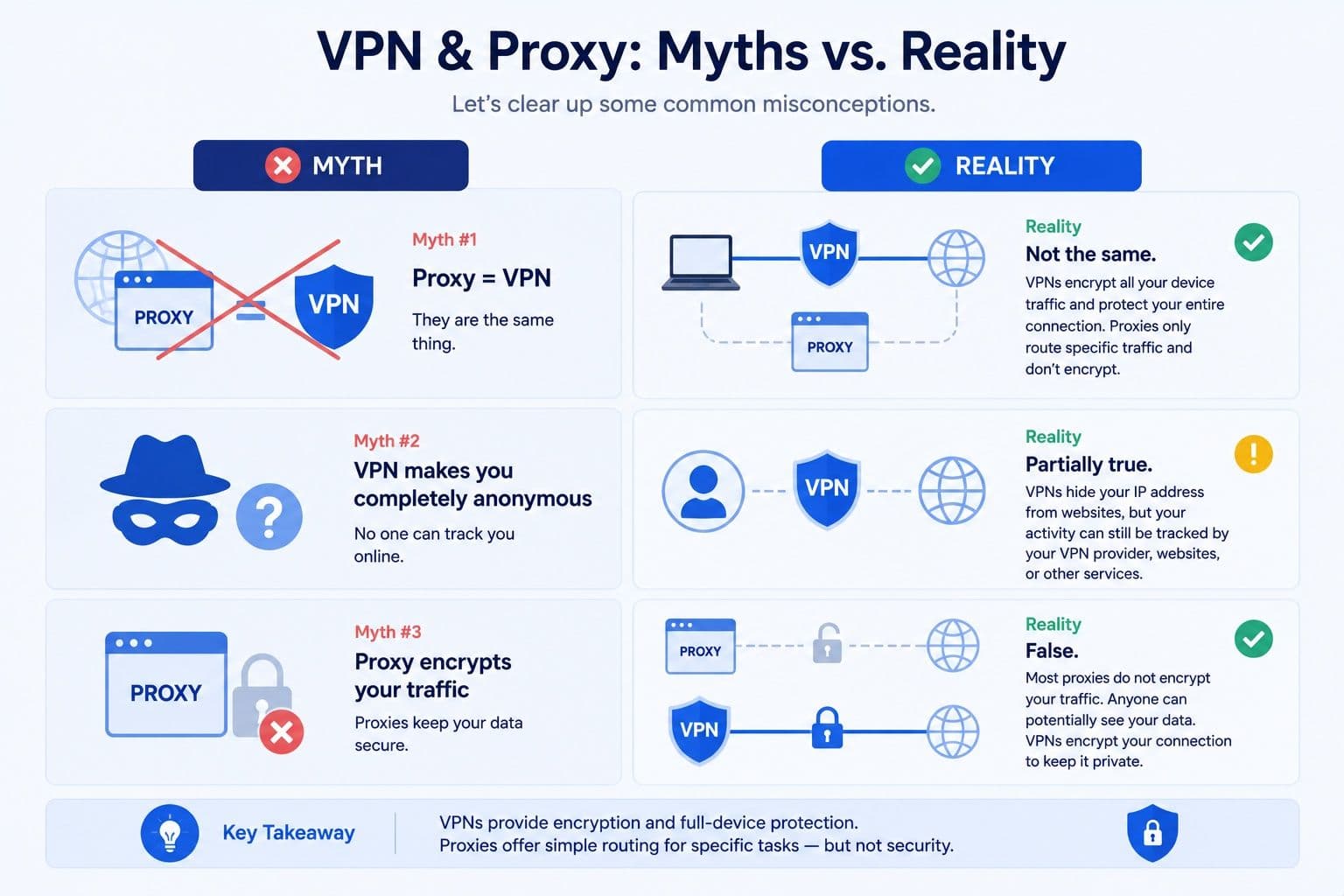
VPNs and proxy servers are often discussed together, which has led to several common misconceptions. Understanding what each technology actually does makes it easier to choose the right solution for your needs.
A Proxy Provides the Same Protection as a VPN
One of the most common myths is that a proxy offers the same level of security as a VPN. While both can change your visible IP address, their purpose is very different.
A proxy primarily redirects traffic through another server and usually works only for a specific application or browser. Most proxies do not encrypt your internet traffic, meaning your data can still be visible to your internet service provider or anyone monitoring the network.
A VPN goes much further by encrypting all internet traffic leaving your device. This protects sensitive information, secures public Wi-Fi connections, and helps prevent unauthorized access to your online activity.
VPNs Always Slow Down Internet
Another misconception is that VPNs inevitably make your internet connection much slower.
In reality, modern VPN services use efficient protocols and optimized server infrastructure that minimize performance loss. If you connect to a nearby server using a modern protocol such as WireGuard®, you may notice little to no difference during everyday browsing, streaming, or gaming. Factors such as your original internet speed, server location, and network quality usually have a greater impact than the VPN itself.
All VPN Services Offer the Same Protection
Not every VPN provides the same level of security or performance.
The quality of encryption, privacy policies, server infrastructure, supported protocols, and application design can vary significantly between providers. Choosing a VPN with strong encryption, a transparent no-logs policy, reliable global servers, and regular software updates is essential for maintaining both security and performance.
Why Choose Guru VPN
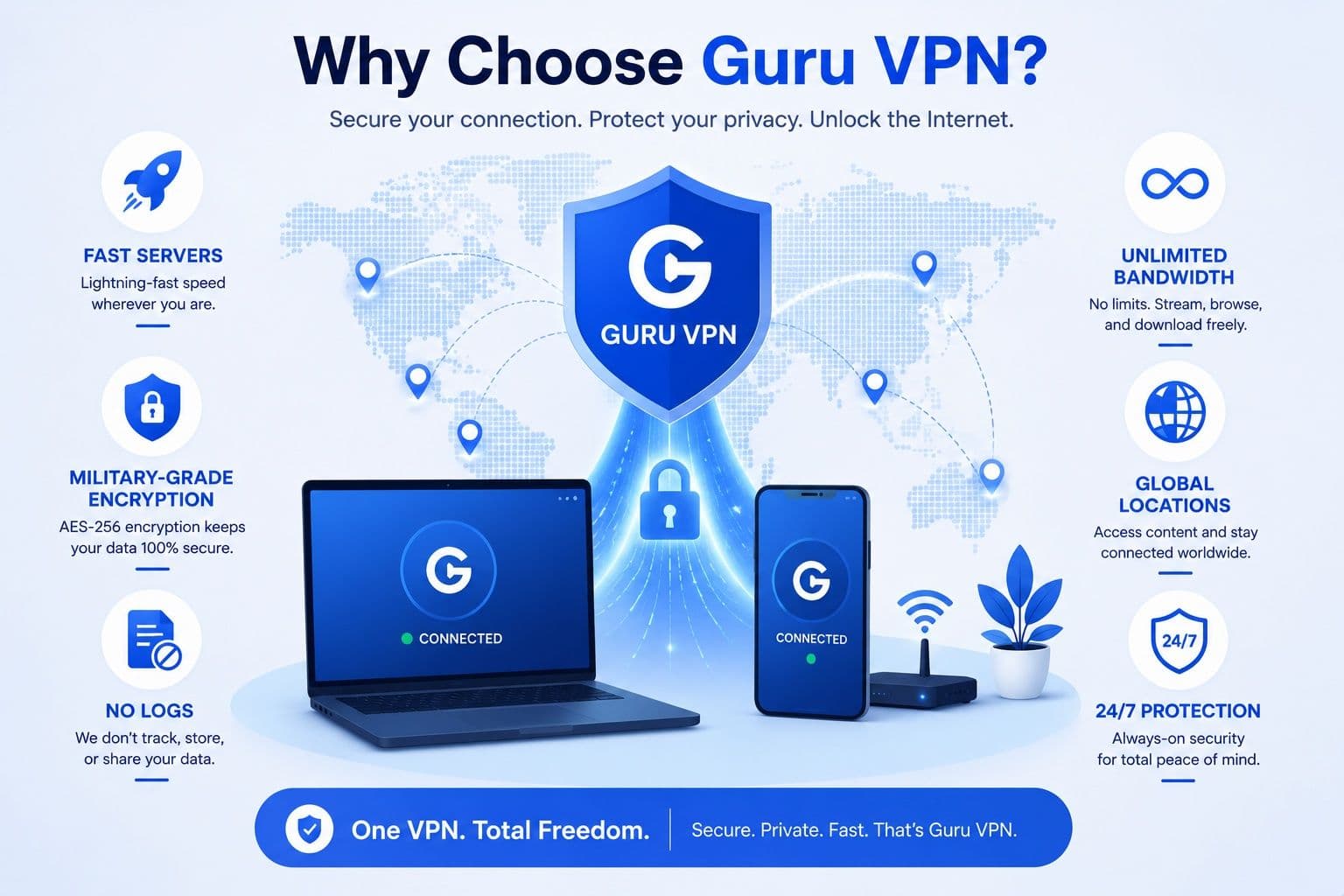
A VPN should do more than simply change your IP address. It should provide strong security, reliable performance, and an experience that's easy to use on every device. Guru VPN combines modern encryption technologies with a global server network to help users browse, stream, work, and game with greater confidence and privacy.
Key Features
| Feature | Benefit |
|---|---|
Easy installation and intuitive interface | Get connected in just a few clicks |
Fast global servers | Smooth browsing, streaming, gaming, and downloads |
Strong encryption | Protects personal data and internet traffic |
Strict no-logs policy | Keeps your online activity private |
Cross-platform compatibility | Works across desktop and mobile devices |
Access to websites, apps, and services | Browse with fewer unnecessary restrictions |
Servers in 49+ countries | More location choices and improved connection quality |
Unlimited bandwidth | No speed or data limits for everyday use |
How Guru VPN Provides Better Protection Than a Proxy
Unlike a proxy, which typically redirects traffic for a single application, Guru VPN encrypts all internet traffic across your device. This means your browser, messaging apps, email, streaming platforms, and other online services all benefit from the same secure connection.
Its global server infrastructure helps maintain fast and stable performance while giving users multiple server locations to choose from whenever network conditions change. Built-in IP masking and leak protection add another layer of privacy by helping prevent accidental exposure of your real identity online.
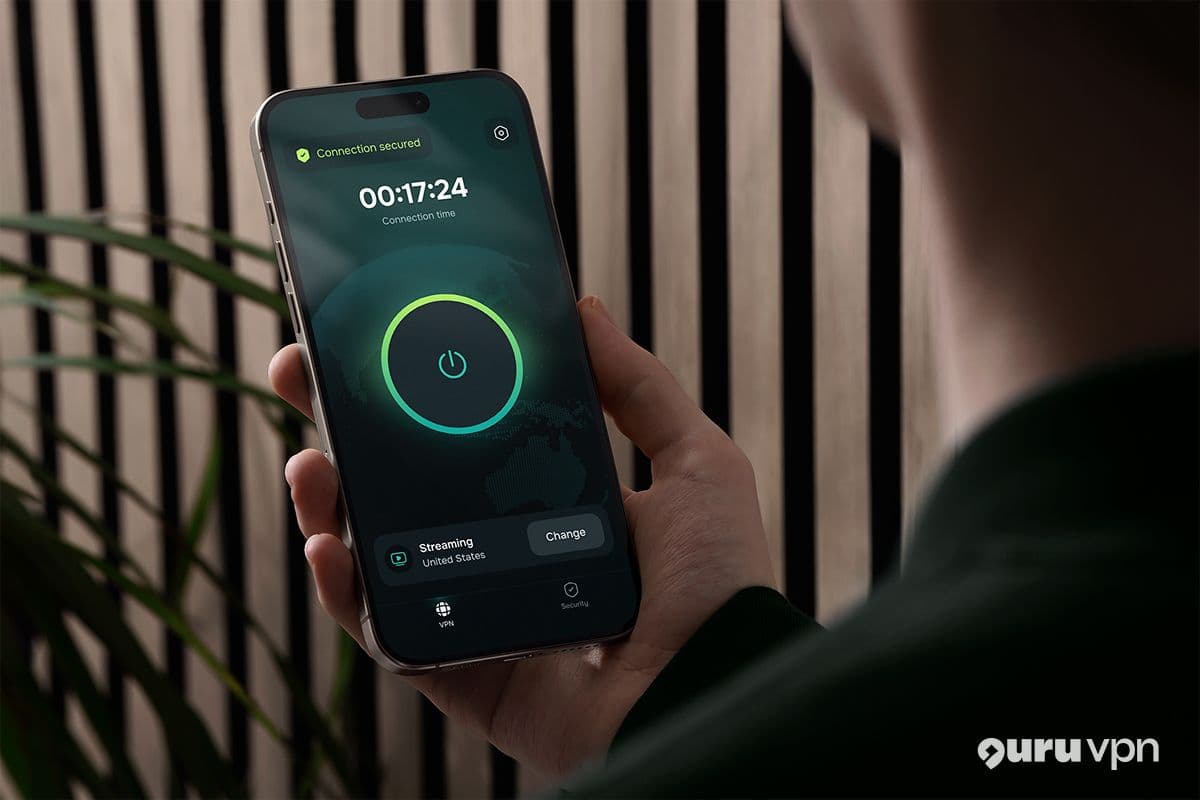
Guru VPN also supports up to four simultaneous device connections under one account, making it easy to protect multiple devices at the same time. Modern technologies such as WireGuard®, ChaCha20 encryption, optimized routing, and MultiHop work together to improve both security and connection stability without adding unnecessary complexity.
Whether you're switching from a proxy or looking for a more comprehensive privacy solution, Guru VPN offers an easy-to-use platform backed by modern security technologies and 24/7 customer support. You can compare available plans or explore the global server network.
How to Choose Between a VPN and a Proxy
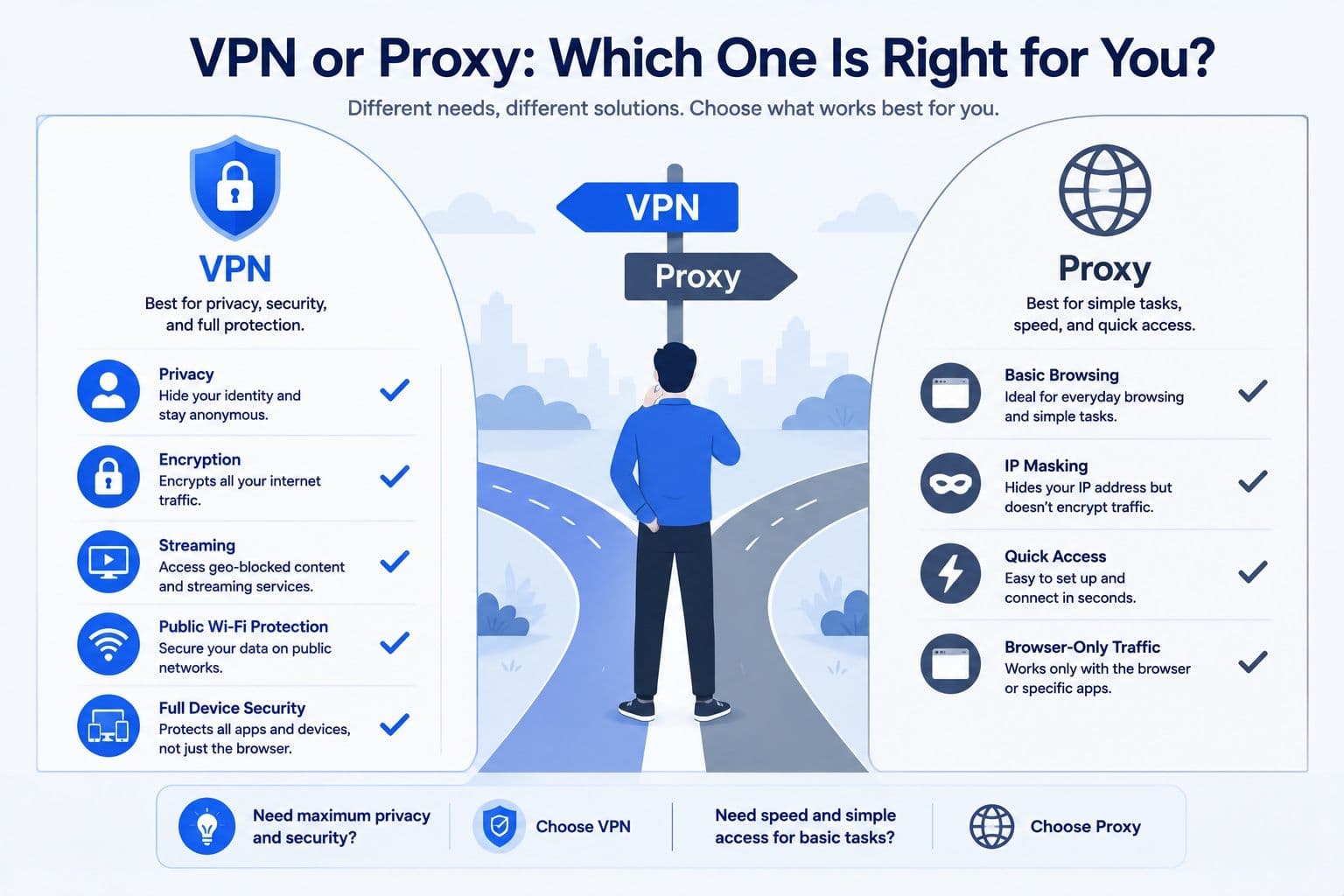
Choosing between a VPN and a proxy depends on what you expect from your internet connection. While both can route traffic through another server, they are designed for different purposes and offer different levels of protection.
Choose a VPN If You Need
A VPN is the better choice if privacy and security are your priorities. It encrypts all internet traffic, helping protect personal information from interception while reducing online tracking. A VPN also secures your connection on public Wi-Fi and provides device-wide protection, so your browser, messaging apps, email, and other applications all use the same encrypted tunnel.
If you regularly work remotely, stream content, shop online, or use multiple devices, a VPN offers a more complete solution.
Choose a Proxy If You Need
A proxy may be sufficient if your goal is simply to change your visible IP address for a specific application or browser. It can be useful for basic location changes, website testing, or application-specific routing where encryption is not essential.
However, because most proxies do not secure all internet traffic, they should not be considered a replacement for a VPN when handling sensitive information.
What to Consider Before Choosing
Before deciding, think about how you use the internet. If security, privacy, and protecting multiple devices matter most, a VPN is usually the better investment. If you only need occasional IP changes for a single application, a proxy may meet your needs. Also consider factors such as the number of devices you want to protect, the types of online activities you perform, and whether encrypted connections are important for your everyday use.
Frequently Asked Questions
For most users, yes. A VPN provides stronger security by encrypting all internet traffic, while a proxy typically only redirects traffic for a specific application or browser. If your goal is better privacy, safer browsing, and comprehensive device protection, a VPN is generally the better option.
Not completely. A proxy can change your visible IP address and route traffic through another server, but it usually doesn't encrypt your connection or protect your entire device. For activities involving sensitive information, such as online banking, remote work, or using public Wi-Fi, a VPN offers much more comprehensive protection.
Yes. Both technologies replace your real IP address with the IP address of another server. The difference is that a VPN also encrypts your internet traffic, making it much more difficult for third parties to monitor your online activity.
Because most proxies don't encrypt data, they can sometimes introduce slightly less processing overhead. However, modern VPN services use efficient protocols and optimized server infrastructure that provide excellent performance for browsing, streaming, gaming, and downloads. In everyday use, the difference is often minimal.
Both can change your apparent location, but a VPN generally offers a more stable and secure connection. Its encrypted tunnel protects all internet traffic while optimized server networks help maintain consistent speeds for streaming and other online activities.
Yes, it's technically possible to use both at the same time, but most users don't need to. Running a VPN and a proxy together can make network configuration more complicated and may reduce connection speed. For most situations, a modern VPN such as Guru VPN provides all the privacy, security, and IP masking needed in a single application.
Choose the Right Solution for Your Online Privacy
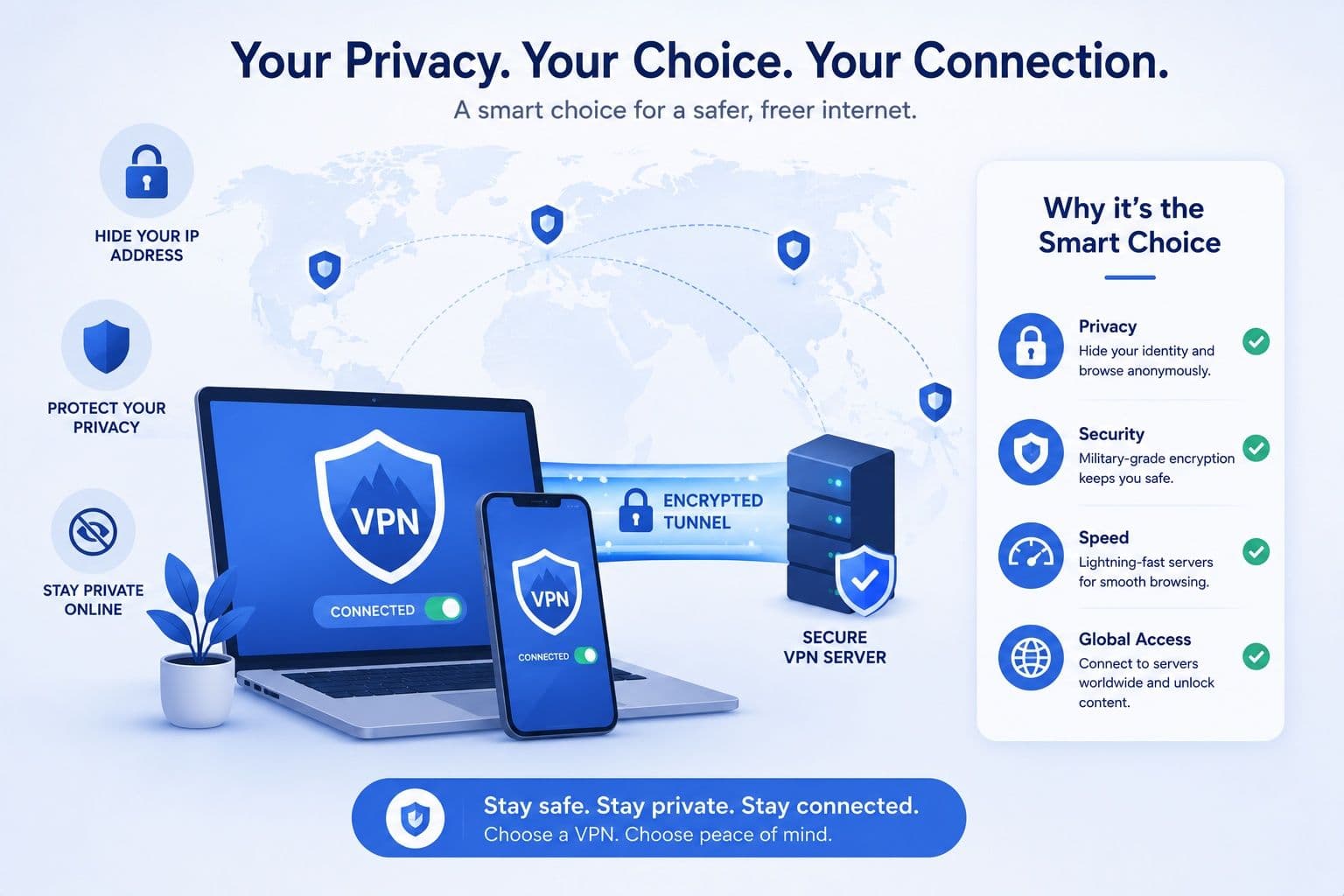
VPNs and proxy servers may appear similar at first, but they serve different purposes. A proxy is useful for basic IP address changes and routing traffic for a specific application, while a VPN provides much broader protection by encrypting all internet traffic across your device. This added layer of security helps safeguard your personal information, reduce online tracking, and improve privacy wherever you connect.
The right choice depends on your needs. If you only need a simple way to access a website through another IP address, a proxy may be enough. However, if you regularly use public Wi-Fi, work remotely, stream content, shop online, or simply want stronger privacy, a VPN is the more comprehensive solution.
Modern services such as Guru VPN combine advanced encryption, reliable global servers, and an intuitive user experience to make secure browsing accessible for both beginners and experienced users. Choosing a VPN with modern security technologies and a trusted server network helps ensure your internet connection remains protected across all your devices.
If you're looking for stronger online privacy and consistent performance, choosing a reliable VPN is one of the simplest steps you can take to improve your digital security.
Secure Your Internet Connection with Guru VPN
While VPNs and proxy servers can both change your visible IP address, the level of protection they provide is very different. A proxy is useful for basic routing tasks and application-specific connections, but it doesn't typically encrypt your internet traffic or secure your entire device. A VPN, on the other hand, protects all online activity through encrypted connections that help keep your personal information private.
For users who value online security, privacy, and reliable performance, encryption plays a critical role. Whether you're browsing the web, working remotely, streaming content, or using public Wi-Fi, a VPN helps protect your data from interception while reducing online tracking.
Guru VPN combines modern encryption technologies, high-speed global servers, optimized routing, and an easy-to-use interface to deliver secure and stable connections across multiple devices. With strong privacy features and reliable performance, it provides a practical solution for everyday internet use.
Choosing a trusted VPN is one of the most effective ways to improve your online security. By protecting your internet traffic with reliable encryption, you can browse, work, and connect with greater confidence wherever you are.