
 EN
EN BR
BR DE
DE ES
ES RU
RU
Articles
Sites web falsifiés et frauduleux : comment les repérer et rester en sécurité en ligne

Guru VPN experts
20.01.2026
Il devient de plus en plus difficile de repérer les faux sites web aujourd’hui. Ils ne sont plus maladroits ni évidents. Au contraire, ils ont l’air très professionnels, copient des marques connues et apparaissent exactement là où vous vous attendez à trouver le site officiel — dans les résultats de recherche, les publicités, les groupes en ligne et les liens sur les réseaux sociaux. Que vous téléchargiez des jeux, regardiez des vidéos en streaming, vous inscriviez à des abonnements ou vous connectiez à vos comptes, vous pouvez facilement tomber sur une copie très convaincante.
Chez Guru VPN, nous aidons les personnes qui aiment explorer de nouveaux sites, contourner les restrictions de contenu et se connecter via différents réseaux. Mais cela implique aussi des risques. Il ne s’agit pas seulement d’éviter les virus ou le vol de mots de passe, mais aussi de s’assurer que le site que vous visitez est légitime dès le départ. Les escrocs réussissent lorsqu’ils parviennent à vous faire croire qu’ils sont dignes de confiance.
Ce guide est là pour vous montrer ce que font les faux sites, pourquoi ils sont si efficaces pour tromper les gens et à quoi vous devez faire attention avant de saisir vos informations personnelles, de télécharger quoi que ce soit ou d’effectuer un paiement. Il ne s’agit pas d’avoir peur, mais d’être prudent et réfléchi.
Un VPN ne rend pas miraculeusement un faux site sûr. Il ne peut pas déterminer si un site est fiable ni empêcher toutes les arnaques. En revanche, il peut réduire considérablement les risques liés aux situations douteuses qui accompagnent souvent ces sites : espionnage de vos données sur un Wi-Fi public, suivi intrusif ou redirections cachées.
Si vous utilisez un VPN en plus de votre bon sens et de l’habitude de vérifier les choses deux fois, vous disposez d’une stratégie solide pour rester en sécurité en ligne.
Ci-dessous, nous allons expliquer comment fonctionnent les sites frauduleux, comment les repérer tôt et comment vous protéger avant qu’un simple clic ne se transforme en problème.
Les faux sites ou sites d’arnaque sont des pièges en ligne conçus pour vous tromper, et ils y parviennent en ressemblant à des sites légitimes. Ce ne sont pas de simples pages mal conçues ; ce sont des copies soignées et convaincantes de marques, de services ou de plateformes réelles.
Leur objectif ? Vous voler quelque chose : vos mots de passe, vos informations bancaires, vos données personnelles, voire le contrôle de vos appareils. Souvent, vous ne réalisez le problème que lorsqu’il est déjà trop tard.
Il est important de comprendre qu’un site mal conçu n’est pas forcément une arnaque. Un site légitime peut paraître daté ou fonctionner imparfaitement sans chercher à tromper qui que ce soit. Les sites frauduleux, eux, sont créés spécifiquement pour manipuler. Chaque élément est pensé pour vous pousser à effectuer une action qui profite à l’escroc.
Ce qui rend ces faux sites particulièrement inquiétants aujourd’hui, c’est à quel point ils ressemblent aux vrais. Ils copient les logos, les mises en page, les couleurs et même les adresses web avec une grande précision. À première vue, tout semble normal. Sans attention particulière, il est facile de ne pas remarquer qu’il y a un problème.
Les sites d’arnaque peuvent sembler différents, mais leurs objectifs sont généralement les mêmes.
Certains cherchent à récupérer vos identifiants de connexion en imitant des services connus — plateformes de jeux, sites de streaming, e-mails ou réseaux sociaux. Vous saisissez vos informations, ils les enregistrent, puis les utilisent ailleurs.
D’autres veulent votre argent. Ils créent de fausses boutiques, vous incitent à souscrire à des abonnements non désirés ou vous font croire que vous devez acheter immédiatement. Vous payez, mais vous ne recevez rien.
D’autres encore diffusent des logiciels malveillants. Vous pensez télécharger un programme, une extension ou une mise à jour légitime, mais le fichier installe en réalité quelque chose de nuisible sur votre appareil.
Certains sites se contentent de manipuler le trafic : ils vous redirigent vers des publicités, vous suivent à la trace ou gagnent de l’argent grâce à vos clics. Cela peut sembler anodin, mais cela met tout de même vos données et votre vie privée en danger à long terme.
Les arnaques évoluent constamment, mais la plupart des faux sites présentent des caractéristiques communes.
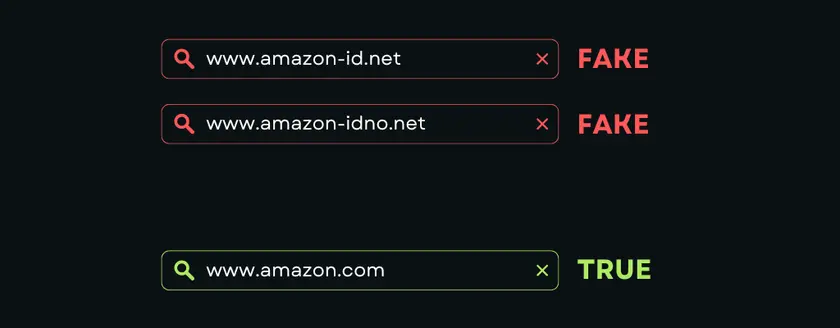
Ces sites copient les pages de connexion de services familiers. Ils ressemblent presque exactement aux originaux, jusque dans les petits détails. La seule différence est souvent l’adresse web, et beaucoup de gens ne la vérifient pas lorsqu’ils cliquent sur un lien provenant d’un e-mail ou d’une publicité.
Si vous saisissez vos informations, un message d’erreur peut apparaître — mais les escrocs ont déjà récupéré vos identifiants.
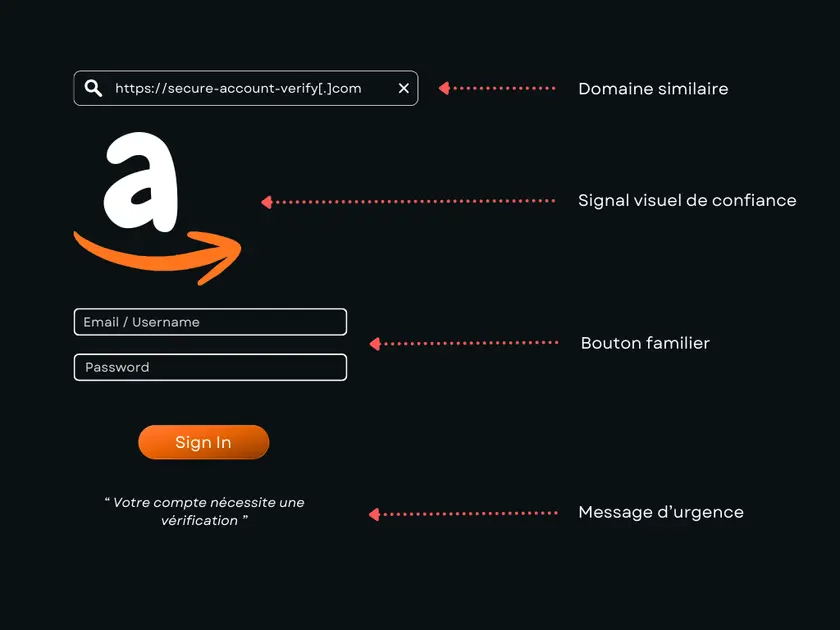
Ces pages fonctionnent parce qu’elles imitent des interfaces et un langage familiers, ce qui pousse les utilisateurs à agir rapidement sans vérifier le domaine ou le contexte.
Ces sites proposent des prix extrêmement bas ou des essais gratuits qui se transforment ensuite en abonnements difficiles à annuler.
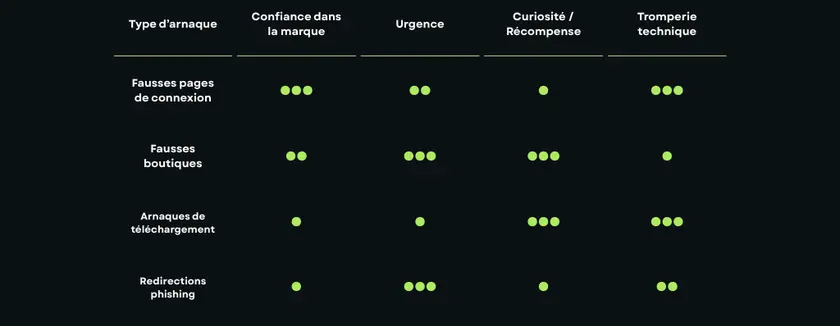
Ils n’affichent généralement pas de véritables informations d’entreprise, de support client ou de politiques de retour. Leur seul objectif est d’obtenir vos informations de paiement.
Beaucoup d’utilisateurs à la recherche de jeux ou de logiciels tombent sur ces sites. Ils apparaissent souvent en tête des résultats de recherche ou dans des publicités.
Vous risquez non seulement de perdre de l’argent, mais aussi d’installer un programme qui permet à quelqu’un d’accéder à votre appareil, de voler vos données ou de l’utiliser pour d’autres attaques.
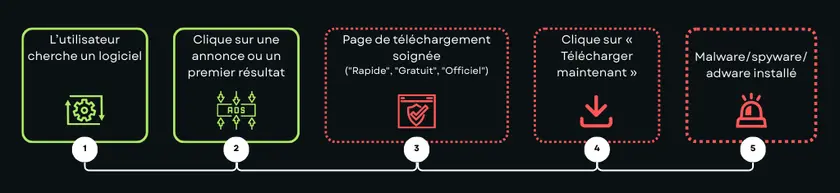
Ces arnaques guident l’utilisateur à travers plusieurs étapes apparemment normales, jusqu’à ce que le résultat final devienne inévitable.
Certains sites servent simplement d’intermédiaires. Ils semblent inoffensifs, mais vous redirigent, injectent du code ou affichent de faux avertissements.
Ils utilisent la pression, la peur et la confusion pour vous manipuler.
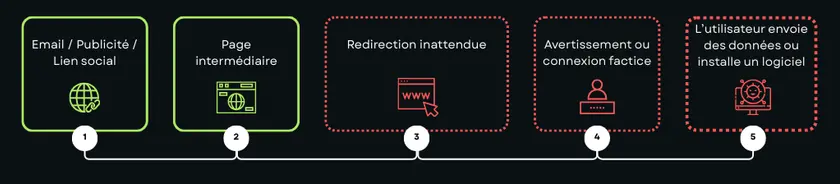
Les arnaques basées sur les redirections désorientent les utilisateurs en les faisant passer par plusieurs pages, ce qui rend plus difficile l’identification de la menace d’origine.
Les sites frauduleux ne ciblent pas uniquement les utilisateurs inexpérimentés. En réalité, ils touchent des personnes de tous niveaux.
Ils visent souvent ceux qui :
La pression du temps joue un rôle important. Beaucoup d’arnaques réussissent parce que les utilisateurs sont pressés. Dans ces moments, même les signaux d’alerte évidents peuvent passer inaperçus.
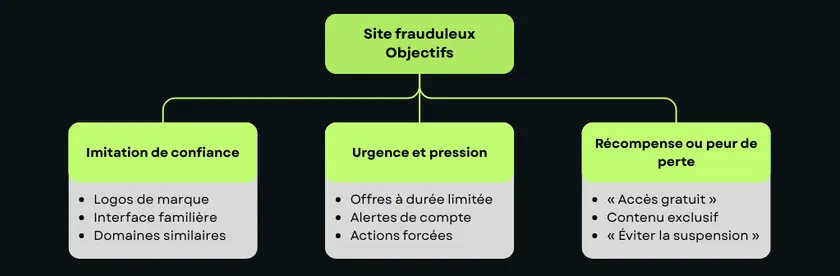
La familiarité est un autre facteur. Lorsqu’un site ressemble visuellement à une marque de confiance, nous baissons naturellement la garde.
La plupart des arnaques reposent davantage sur des déclencheurs psychologiques que sur une complexité technique. En imitant la confiance, en créant l’urgence et en présentant des récompenses ou des pertes, les escrocs réduisent le temps de vérification.
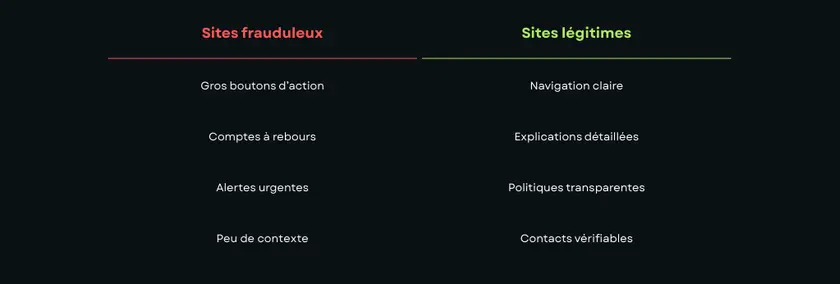
Ils réussissent non pas parce que les utilisateurs sont négligents, mais parce qu’internet valorise la rapidité — et les escrocs exploitent cette habitude.
Déterminer si un site est authentique consiste souvent à ralentir et à vérifier quelques éléments simples. Les sites frauduleux veulent vous presser et vous distraire. Les sites légitimes résistent à un examen attentif.
Les escrocs utilisent des domaines très proches des originaux : petites fautes d’orthographe, mots ajoutés ou extensions inhabituelles.
Les liens courts peuvent masquer la destination réelle.
Si quelque chose vous semble étrange, faites confiance à votre instinct.
Un design soigné ne garantit pas la sécurité.
Fautes, formulations étranges ou informations manquantes sont des signaux d’alerte.
Les vrais sites expliquent clairement qui les gère, comment les contacter et ce qu’ils font de vos données.
HTTPS est nécessaire, mais insuffisant.
Même les sites frauduleux utilisent des certificats de sécurité.
Téléchargements automatiques, demandes répétées d’autorisations ou pop-ups immédiats sont de mauvais signes.
Les arnaques créent de l’urgence : agir maintenant, compte suspendu, offre limitée.
Si vous n’avez qu’une seule option sans explication, méfiez-vous.
Les entreprises légitimes gagnent votre confiance progressivement.
Les conséquences peuvent être importantes : comptes compromis, pertes d’argent, abonnements non désirés, vol d’identité ou logiciels malveillants.
Vos données peuvent également être revendues, ce qui augmente les risques de nouvelles arnaques à l’avenir.
Les arnaques profitent des moments d’inattention.
La meilleure protection consiste à savoir reconnaître les signes suspects, vérifier avant d’agir et ralentir si quelque chose semble étrange.
Faites aussi attention à votre connexion. Les réseaux publics exposent davantage vos données.
Guru VPN peut aider en chiffrant votre trafic, en masquant votre adresse IP et en réduisant votre exposition en ligne. Cela ne remplace pas la prudence, mais la renforce.
Internet regorge de copies convaincantes. Rester vigilant — et ajouter une couche supplémentaire de confidentialité — fait toute la différence.